Demo site — content shown is for demonstration only, not final data. | 演示站点,内容仅供演示

2026 Countdown: How EUDR Is Rewriting the Entry Rules for European Building Material Procurement
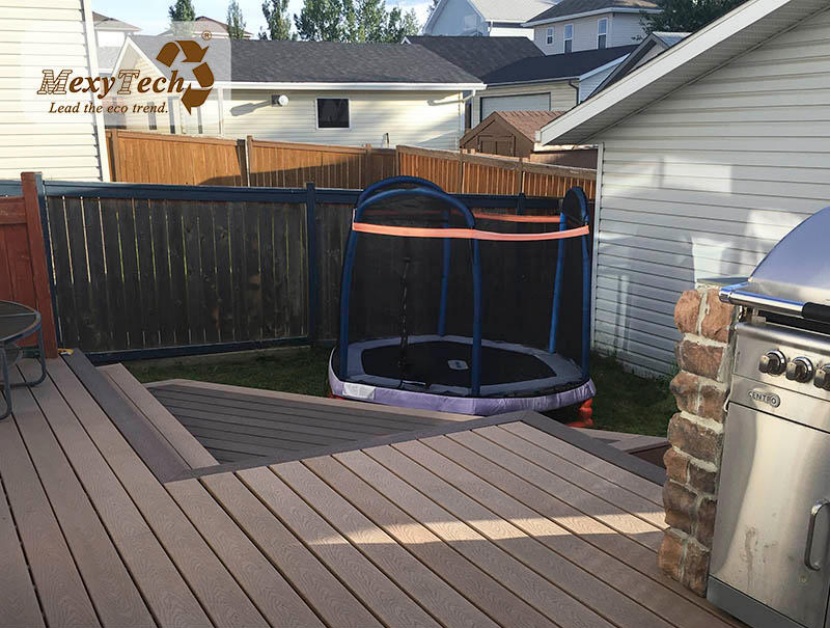
By 30 December 2026, every WPC, wood based panel, and timber related product sent to the EU market needs proper documentation. Specifically, these goods must arrive with a confirmed Due Diligence Statement. This paperwork also has to include accurate plot-level GPS coordinates. Companies that ignore these rules will face massive financial penalties. Authorities can actually issue fines reaching up to 4% of a business’s total yearly EU revenue. You should understand that this is not a slow rule change. Instead, it serves as a strict cutoff date. Because of this sudden shift, the new law will push unprepared suppliers out of the industry almost immediately.
The Deadline That Changes Everything
Regulation (EU) 2023/1115, known as the EU Deforestation Regulation (EUDR), covers seven commodity chains: cattle, cocoa, coffee, oil palm, rubber, soy, and wood. WPC products fall under the “wood” category because they contain wood flour or wood fibre, even when mixed with polymers.
The application timeline is now confirmed:
| Operator type | Compliance deadline |
| Large and medium-sized operators | 30 December 2026 |
| Micro and small enterprises (SMEs) | 30 June 2027 |
This means that from 30 December 2026, every large operator placing WPC decking, cladding, or fencing on the EU market must submit a Due Diligence Statement through the EU Information System. That statement must include proof that the product is deforestation-free (no deforestation after 31 December 2020) and legally sourced according to the country of origin’s laws.
Non-compliance carries real penalties:
· Fines: up to 4% of total annual EU turnover in the preceding financial year
· Confiscation: of the relevant products and any revenue gained from them
· Temporary exclusion: from public procurement for up to 12 months
· Prohibition: from accessing EU public funding or tenders
What Buyers Will Actually Ask For: The Compliance File Checklist
EUDR does not accept vague claims. A simple “eco-friendly material” statement will not satisfy the regulation or the buyer who must submit it to customs. The required documentation is specific and layered:
| Document type | What it covers | Why buyers need it |
| Due Diligence Statement | Formal declaration submitted via EU Information System | Legal obligation for every shipment |
| Geolocation data | GPS coordinates with at least 6 decimal digits for every production plot | EUDR requires plot-level traceability — not country-level |
| Risk assessment report | Evaluation of deforestation and legality risk per supply chain | Mandatory component of the DDS |
| FSC Chain of Custody | Verified chain from forest to factory gate | Strong supporting evidence, though not a standalone substitute for DDS |
| EPD (Environmental Product Declaration) | Quantified lifecycle environmental data (ISO 14025) | Not required by EUDR directly, but increasingly expected in tender files |
| VOC test reports | Emission measurements per EN 717-1 or equivalent | Safety requirement for residential/hospitality/public projects |
The practical impact is clear: a buyer who cannot obtain these documents from a supplier will face customs delays, failed tender submissions, and personal liability risk under EUDR. This turns the compliance file from an administrative attachment into a commercial prerequisite.

What DOMOTEX Asia 2026 Revealed About Buyer Behaviour
Trade shows reveal market pressure earlier than formal reports. At DOMOTEX Asia 2026, the shift was visible in the types of questions buyers asked.
Three European distributors and two Australian contractors, observed across multiple booth conversations, shifted their enquiry pattern noticeably:
· Previous pattern: “What is the price per square metre? What colours are available? What is the load rating?”
· Current pattern: “Can you provide geolocation data for the wood fibre source? Do you have an EPD? Has VOC been tested to European standards? Can you support a compliance review if we are audited next year?”
This is not anecdotal noise. It is a systematic change in what buyers treat as qualifying criteria. Sustainability and transparency are no longer bonus points. They are entry tickets.
From Bonus Point to Entry Ticket: The Threshold Shift in European and Australian Markets
For European and Australian B2B channels, the documentation threshold has moved structurally:
| Requirement | Status in 2024 | Status in 2026 |
| FSC Chain of Custody | Preferred by large buyers | Expected as baseline |
| EPD documentation | Optional for most projects | Required in government procurement and LEED/BREEAM-rated projects |
| Low VOC certification | Regional requirement (e.g. French VOC A+) | Standard requirement across EU/AU commercial projects |
| Geolocation traceability | Not requested | Mandatory under EUDR for wood-containing products |
A distributor serving Germany or the Netherlands does not want to explain missing documents to every downstream client. A contractor bidding for outdoor public space work needs technical files before the material is even shortlisted. The product is not judged alone. The file behind the product is judged with it.
How Compliance Pressure Becomes Brand Premium
Compliance costs money. Testing, certification, raw material tracking, system management, and documentation work all consume time and budget. But when the market raises its entry threshold, weaker suppliers lose room to compete on price alone. That opens space for manufacturers with complete files, stable production, and credible export experience.
The cost-benefit calculation is now reversed:
| Scenario | Supplier A (no compliance file) | Supplier B (full compliance file) |
| Price | 5% lower per m² | 5% higher per m² |
| Customs risk | Potential seizure and 4% turnover fine | Passes clearance |
| Tender eligibility | Excluded from government/LEED projects | Eligible for all project tiers |
| Client confidence | Buyer must chase documents for weeks | Buyer receives package on first request |
| Hidden cost to buyer | Delayed approvals, replacement risk, legal exposure | None |
Once compliance becomes the entry ticket, the cheapest supplier is not always the safest supplier. Buyers start calculating hidden costs: document gaps, delayed approvals, failed tender submissions, replacement risk, and after-sales disputes.

How Mexytech Responded at DOMOTEX Asia
Mexytech presented its EUDR compliance readiness and sustainable material portfolio at DOMOTEX Asia 2026. What distinguished the presentation was not the product display alone. It was the way sustainability and compliance readiness were integrated into the business offer — material structure, surface performance, FSC-related sourcing, low-emission production, and EPD progress discussed in one conversation, not scattered across separate departments.
For a WPC supplier that can address compliance, safety, and lifecycle documentation simultaneously, the buyer sees less risk. That impression is subtle at first. Then it becomes decisive during project review.
What WPC Manufacturers Should Do Before 30 December 2026
| Action | Timeline | Priority |
| Map supply chain geolocation data for all wood fibre sources | Immediately — required for DDS | Critical |
| Verify FSC Chain of Custody or equivalent certification | Before Q3 2026 | Critical |
| Prepare LCA model and initiate EPD certification process (3-5 month lead time) | Before Q2 2026 | High |
| Compile VOC test reports per European standards | Before Q3 2026 | High |
| Train sales team to present compliance file as part of product specification | Before Q4 2026 | Medium |
| Register access to EU Information System for DDS submission | Before December 2026 | Critical |
The companies that do this early will not only avoid trouble. They will look more reliable before the first sample is shipped. In the next stage of global building material trade, trust will not come from claims. It will come from records.
FAQ
Q1: Why does EUDR matter specifically to WPC suppliers?
WPC products contain wood flour or wood fibre, which places them under the “wood” commodity category in Regulation (EU) 2023/1115. Any WPC product placed on or exported from the EU market after 30 December 2026 must be accompanied by a verified Due Diligence Statement proving the wood content is deforestation-free and legally sourced. Without this, the product cannot legally enter the EU.
Q2: Is FSC certification enough to comply with EUDR?
FSC Chain of Custody provides strong supporting evidence for responsible sourcing, but it is not a standalone substitute for the EUDR Due Diligence Statement. EUDR additionally requires plot-level GPS coordinates (minimum 6 decimal digits), a formal risk assessment, and submission through the EU Information System. FSC can form part of that package, but the DDS itself is the mandatory legal instrument.
Q3: What are the penalties for non-compliance with EUDR?
Under Article 25 of Regulation (EU) 2023/1115, penalties include fines up to 4% of the operator’s total annual EU turnover, confiscation of the relevant products, temporary exclusion from public procurement (up to 12 months), and prohibition from accessing EU public funding or tenders.
Q4: Why are European buyers asking for EPD alongside EUDR documents?
EUDR addresses sourcing legality and deforestation risk. EPD addresses lifecycle environmental performance — carbon footprint, energy consumption, resource use, and emissions. For large projects undergoing LEED, BREEAM, or DGNB certification, EPD is a scoring requirement. Buyers who must satisfy both compliance and green building targets need both document sets from the same supplier.
Q5: How should WPC manufacturers prepare for the 30 December 2026 deadline?
Priority actions:
(1) Map geolocation data for all wood fibre sources — this is the single most difficult data point to retroactively assemble;
(2) Verify FSC or equivalent sourcing certification;
(3) Begin EPD certification process, which takes 3-5 months minimum;
(4) Compile VOC and safety test reports per European standards;
(5) Train sales teams to present compliance files as a standard part of the product specification, not an after-hours email attachment.